
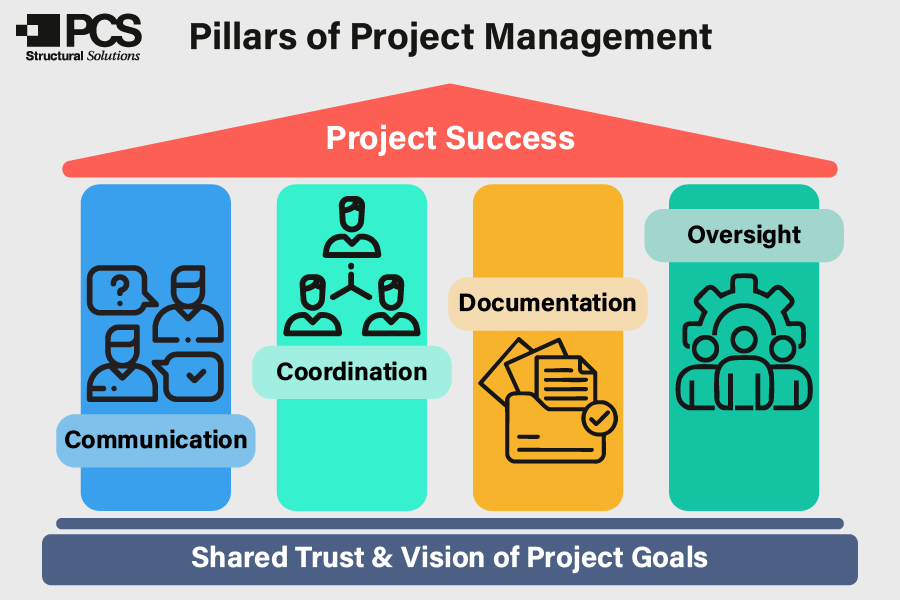
Project success is no accident. It requires rigorous and continuous management and hard work from all team members and stakeholders. Large, multi-year projects take these requirements to another level, demanding multi-layered communication, coordination, record-keeping, and oversight from each discipline individually and from overall project leaders. Healthcare projects add on the input of medical planning teams and user groups, whose needs and requirements may evolve through the project’s long timeline.
We’ve had the honor of partnering with some of the Pacific Northwest’s preeminent owners and the best of the design and construction community on some very large and significant projects, such as Providence Swedish’s First Hill Medical Center North Tower and Block 95, Tacoma General Hospital Expansion, and Asante Rogue Regional Medical Center Tower Expansion. Across the breadth of our experience, we’ve identified some common themes that support successful project outcomes:
1. Put the Project First
Setting common goals and expectations that are best for the project and always working toward them as a team are the first steps to success. They require everyone to get together to identify and agree to common ground and a ‘project first’ mentality.
2. Prioritize Face Time
It’s important for teams to know each other and trust each other. There’s no substitute for face-to-face and in-person contact to achieve the strong relationships that underpin high-performance. Deep dives into detailed coordination points between the design and construction disciplines are critical times for real-time team connection.
3. Build in Backup
Large projects take years to complete; it’s inevitable that there will be some team turnover. Planning in team redundancy early on helps maintain continuity. We build in backup for every role on the organization chart and keep them apprised of the project details. This has the added benefit of supporting incidental QC, as we’re watching each other’s work.
4. Get Organized
Over the last 10+ years, projects have gotten faster and more complex. And in today’s technology-driven world, there are dozens of digital tools and virtual platforms for communication and collaboration—Teams, texts, email, chats, spreadsheets, Miro, and more. Communication can become inefficient and disorganized if a team is trying to use too many tools and platforms at once. Project managers must find their organizational style, establish clear communication protocols, and define and stick to a core platform and a set of communication norms and documentation standards to help rein in the options and keep things organized and efficient. Regardless of platform, regular coordination meetings with a standing agenda and notes sent out to the whole team are great ways to work through complex things in a clear and documented way.
5. Get Coordinated
Projects that progress seamlessly may seem to happen by magic, but it’s high levels of coordination behind the scenes that make it happen. Project managers who push people to get together to discuss things help break down silos. Purposefully and proactively sharing information within a firm and between disciplines and companies—especially about things that could affect the project’s overall design—prevents silos and support project progress.
A key coordination point is between designers and the BIM team. Designers communicating proactively and regularly with their BIM team is key to the BIM team understanding the bigger picture of the building program. This gives them context so they can note when they find clashes or issues with the design approach to enable early modification. With another set of eyes on the design and ongoing communication between groups, we benefit from the BIM team’s valuable insight and feedback and also limit the risk of assuming someone else is fixing any issues discovered.
6. Stop, Collaborate, and Listen
Big teams mean lots of players to keep straight, but also access to different perspectives. Having contractor expertise during design to inform cost estimates and constructability considerations, for example, saves time down the line. It also helps teams move forward together. It can be easy to adopt a ‘stay in your lane’ mentality on large projects, but regularly discussing interdisciplinary topics helps teams stay together on interrelated and interdependent decisions and workflows, especially across long project timelines. For large teams and projects with many interdependencies, a full-team pull plan is an incredible tool for creating broad awareness and buy-in to promote ongoing coordination and maintain schedules.
7. Think Ahead and Ask Proactively
Part of effective coordination and collaboration is looking down the line and working backward—what do I need to know to complete this task, when do I need to know it, who do I need to ask for that information, and what is a reasonable timeline for them to provide it? Lines of self-inquiry such as this prevent fire drills by promoting proactive planning and efficient information gathering. It’s especially important when not having the right information at the right time might stall design or construction. In a design-build project, letting the contractor know in advance when we need critical information or decisions helps them develop a clear plan that keeps the team informed.
8. Meet Timelines to Maintain Trust
Doing what you say you’re going to do, when you say you’ll do it, is one of the best ways to create positive project outcomes. Doing the opposite is one of the fastest ways to erode trust and team effectiveness. Good project managers build schedule buffers to prevent problems, and good project team members respect each other by respecting schedules and deadlines.
9. Value Everyone’s Time
Efficient and high-value discussion is critical in coordination meetings—with 20+ people in the room, no one has time to just go through the motions. Listening as well as participating actively are important behaviors from all attendees. Planning ahead and coming prepared to discuss open action items, ask for what you need, and provide what others need is key. One strategy we use is a regular email outlining a running list of items we’ve coordinated, with a defined timeline, to inform standing coordination meeting discussions. Things get checked off and other things get added, creating a running log across the project timeline and supporting efficient and productive conversations in meetings.
10. Go with the Flow
Especially in healthcare facilities and other critical institutions, technology and specialty equipment needs can change rapidly, requiring flexibility from the project team to design and construct facilities that can adapt to the future—without knowing what the future really holds. Project design teams must be aligned with an efficient way to share information, look ahead to potential future evolutions, and adapt designs accordingly.
Every one of these elements of successful project management and project success requires ongoing effort from project managers and all team members in order to yield results. With collective early buy-in, ongoing commitment, and team-oriented attitudes, success can be the end game every time. Let’s get to work!